Why do cold liquids fog up the glasses that contain them?
Shortly after containing a very cold liquid, the container becomes foggy, even forming small drops of water on its walls.
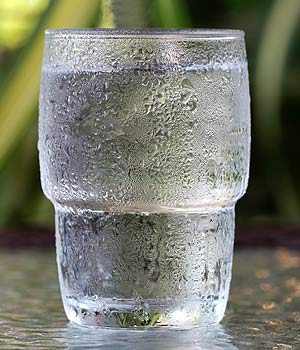
Glasses are said to “sweat” when they contain a very cold liquid. But it is not true. That water is not yours.
Where does that water come from then? What explanation does science have? Well in this case the answer is neither difficult nor complex.
By the kinetic-molecular theory of matter (TCM) we know that, when the glass of the glass comes into contact with the cold drink, it also cools and with it, the water vapor H2O (g) that contains the air that contains it. surrounds.
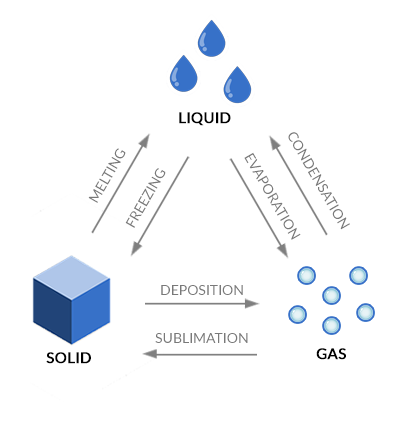
An atmospheric water vapor that, when its temperature decreases, changes its state from gaseous to liquid. A change of state known as condensation or transition from gas to liquid.
That is why the glass becomes cloudy.
And the water does not come from the glass, no, but from the air that surrounds it. In other words, the glass does not “sweat”, as that would imply that the water would come out of it.
The glass is fogged by the adherence of millions of water molecules from the air to its wall, which can form tiny liquid drops in the shape of a hamburger, when they are at rest on it. A process that does not have to end there.
If the glass is cold enough, the newly formed liquid water could change state again, now to solid, forming small ice crystals. A change of state known as solidification or transition from liquid to solid.
As you can see, it is easy to understand why the glass is fogging. It is about condensation, a physical transformation that we can also appreciate in other situations.